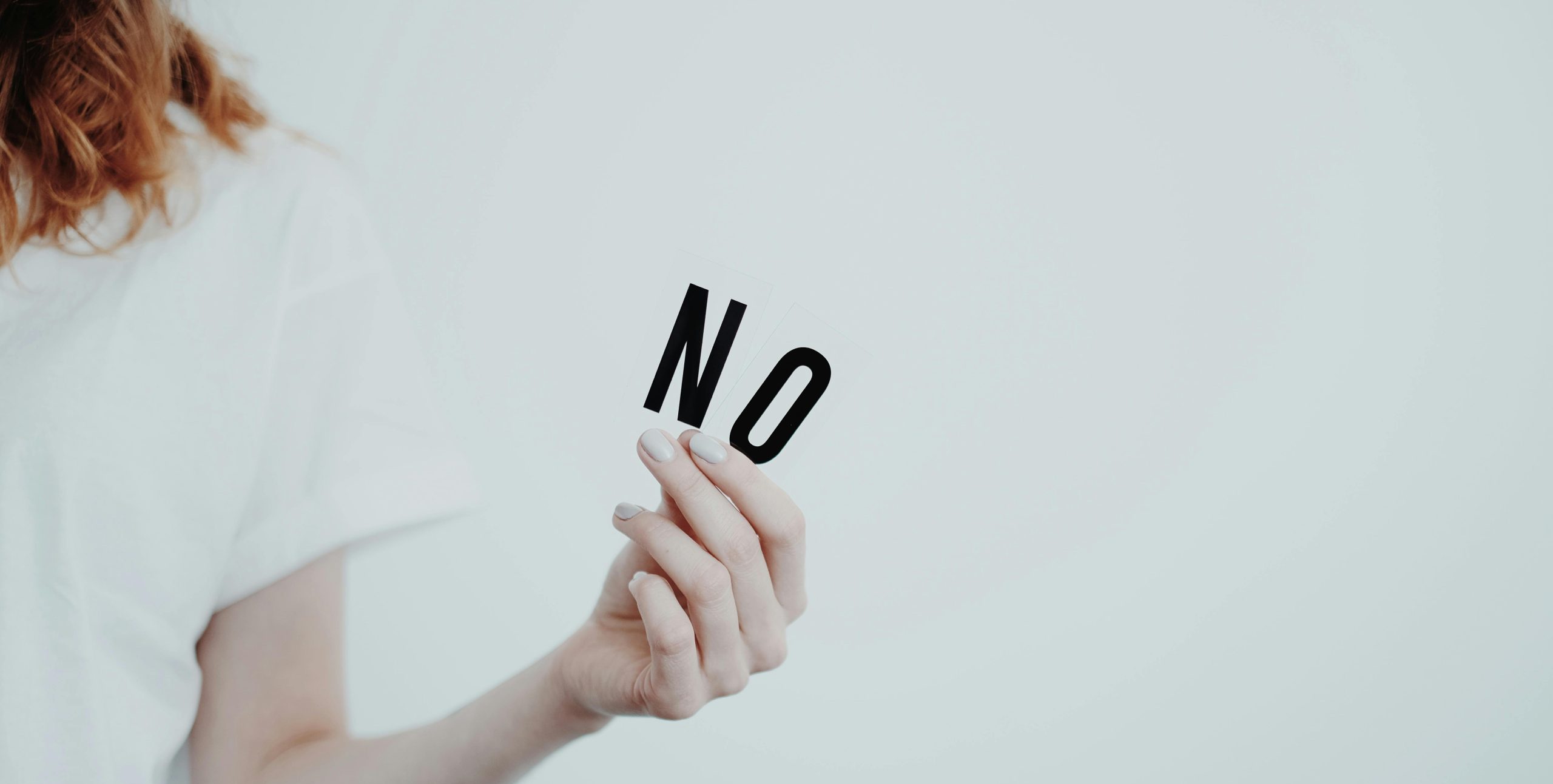
No.
No?
No!
No is a familiar and commonly used word. It’s estimated that toddlers hear the word “no” about 400 times a day. I think that is way too many, but there are extremely valid reasons why an adult would use the word “no” when caring for a child.
Telling the little one, adolescent, and young adult in our care “no” is intended to protect them from harm and to keep them safe.
My thoughts aren’t on child psychology, at least not currently, as I am not with my delightful granddaughters. Instead, I am processing how this word’s usage, impact, and importance change in adulthood when we are responsible for making our own decisions and choices.
I would love to be able to state that the word “no” is black and white, with no gray area – that there is a clear distinction between saying “yes” and saying “no.” However, I believe as nurturers and caregivers, there is a lot of gray area. If we are honest, we can admit to wanting to say “no,” but instead, we choose to do what we think is expected of us – from others and ourselves. Therefore, “yes” is not exactly a “yes.”
Is this because the word “no” has been diluted? Is it because we habitually hesitate to state and act on our wants and needs?
I’ve observed children, including my own, struggle and object in various ways to being told “no.” I can understand why when I could pause and look through their eyes and desires. After all, children see something they want, but we see something that could harm them.
I’d like to lean into that last statement. Children see something they want, but we see something that could harm them. Part of our job as adults caring for children is to protect them from harm and unsafe situations. Doesn’t the same apply to ourselves as well?
How often have you said “yes” when you wanted to say “no”? Was your “no” a statement, or was it said as if it were a question – without conviction? Was your desire to say “no” overruled by the inner conflict to prioritize the wants and needs of another over your own? Did you say “yes” to avoid confrontation or arguments or to avoid expending more time and energy?
There is no judgment here. I have, at some time or another, and to one extent or another, chosen to do each of these. Why? Likely for the same reasons you have. Because you quickly weighed what would be easiest for you, which does not always equate to what is the safest and least harmful for you, both physically and emotionally, in the long run.
That sounded a little dire, but I am going to let it stand. And I choose to do so because, as you may recall from an earlier blog, I am working to state what I want and need unapologetically. And that includes saying “no” when I need and want to say “no.”
This can be as straightforward as saying “no” when asked if I would serve in some position I do not want or have the time for. Or, it can be more layered by saying “no” to a loved one, breaking from pre-established patterns when previously I would have prioritized their needs and wants. I’ve discovered the short-term easy has come at an emotional and physical price.
My friend, I hope that you will pause before stating a habitual “yes.” Instead, take a moment to decide if the healthier reply for you will be “no.” Then state it with a period because there is no need to yell it when you can say it with confidence 💙

2 Responses
Say no with confidence very true I’ve done this many times to protect myself and my family.
Thank you for sharing, Brittany. Saying no with confidence is important for both the person saying it and the one hearing it – just as you stated.
Sending a Hug,
Judy